

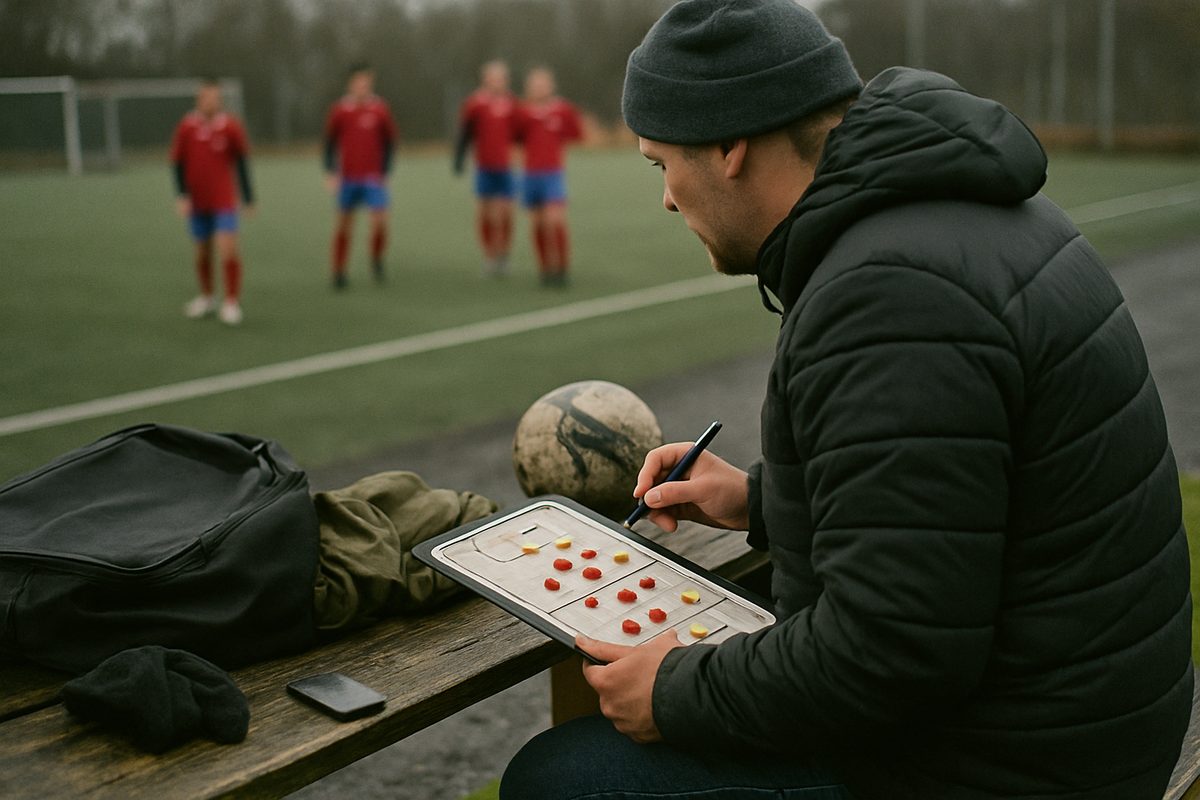
Football Team Selection: How to Pick Your Squad Each Week
Team selection is about more than putting your best players on the pitch. For coaches in youth football, it requires balancing development, fairness, and the demands of the match.
Start with the playing time rules
The Norwegian FA's guidelines set the framework for team selection in youth football. All players must receive equal playing time in age groups up to and including 12 years. From age 13, the rules allow for variation, but playing time should still be distributed broadly. These rules affect how you select your team: if you have 14 players at training before a match, and all turn up ready to play, your team selection must ensure everyone gets real time on the pitch. Concretely, with 14 players and 7 on the pitch simultaneously, you substitute at least once each half to give everyone approximately 30 minutes.
Note which players have received the least time in recent matches. Your team selection for the next match should be adjusted so these players start or get longer periods on the pitch. Write this down after each match, so you have the overview when you pick the next team.
Choose the formation based on the players you have
Many coaches set the formation first and distribute players afterwards. Do the opposite: look at the players who turn up for the match, and choose a formation that utilises what you actually have. If you have three players who are confident in passing play, but only one natural winger, play a formation that gives the three space centrally. If half the team prefers to stand high and press, don't set a formation that requires disciplined deep defending.
A common mistake is sticking to 4-3-3 because "that's what we play", even when you lack width or have an excess of midfield players. Adapt the formation to the match: against a team that presses high, you might use fewer attackers and an extra midfielder who can receive the ball when you win it.
Assign positions based on what players actually master
Team selection is about matching players with tasks they can solve. A player who struggles to turn with the ball under pressure doesn't suit being the lone striker against a team playing high-pressure football. Instead, place this player on the wing or as an inside forward, where they can receive the ball in motion.
Rotate players between positions over the season, but not in the same match without reason. If a player needs to learn midfield, give them 40 minutes there, not 15 minutes in three places. When you write down the team selection before the match, also note why each player is positioned there: "Mathias – right back, good one-on-one, supports Sander going forward." This forces you to think through whether the placement makes sense.
Create a substitution plan before kick-off
You shouldn't decide every substitution minute by minute in advance, but you must know the main lines. Write down when you substitute (at 15 minutes, at half-time, with 10 minutes left), who comes on, and which positions they take over. If a player comes on as centre-back, who goes off, and where do they go if you adjust the formation?
A substitution plan lets you follow the match instead of hunting for solutions while the clock ticks. When you see your left winger is under constant pressure, you've already decided you'll substitute there at 20 minutes, so you make the change calmly and explain to the new player what the situation is.
Communicate the team selection to the players
Players should know where they're playing at least ten minutes before kick-off. Tell the whole group: "Today we're playing 4-4-2. Emma and Oliver up front, Mathias and Sander on the wings, Nora and Leah in the middle, Adrian, Kasper, Sofie, Marius in the back line, Lucas in goal. First substitution at 15 minutes." Repeat the positions for players who are uncertain.
When you substitute, tell the player coming off why: "You've done a good job, now I'm giving Emilie time in the same position." Don't say "you played poorly" or leave it hanging. To the player coming on: "You're going on as left back, they're carrying the ball a lot down that side, so stay compact."
Adjust the team selection during the match when needed
If the match develops differently than expected, change the team selection. This might mean moving a player to another position, changing formation, or making an extra substitution. Example: the opposition is overpowering you in midfield, and you see their two central midfielders have all the space they want. You can move one of your wingers inside as an extra midfielder, even though it means sacrificing width. Explain the change to the affected players: "Adrian, you're pulling inside as an extra midfielder, take the right central one when they have the ball."
An adjustment doesn't need to be a sign that the original team selection was wrong. The match changes, and you adapt the team to what's actually happening.
Evaluate the team selection after the match
When the match is finished, spend five minutes writing down what worked and what didn't work. Not what players did individually, but whether the team selection gave them the opportunity to succeed. If your right back had too much to do because the winger in front didn't track back, that's a selection problem: either you need a different player there, a different formation, or you need to train the situation better.
If three players got too little playing time, note it, and ensure they start the next match or get longer periods. Team selection is work that stretches over several matches, not an isolated exercise each Saturday.

